
Baked German Pancake, often whispered with a touch of reverence and a hint of sweet nostalgia, is more than just breakfast; it’s an experience. Imagine a dish that effortlessly transforms simple ingredients into a puffy, golden cloud of deliciousness, subtly sweet and impossibly light. This is the magic of the Baked German Pancake, a culinary embrace that has captured hearts and taste buds for generations. It’s the kind of recipe that feels both comforting and exciting, a delightful surprise waiting to emerge from your oven. People adore it for its dramatic rise, its airy texture that melts in your mouth, and its incredible versatility. Whether you prefer it dusted with powdered sugar and a squeeze of lemon, or adorned with fresh berries and a dollop of whipped cream, this Baked German Pancake is a showstopper that never fails to impress. What truly sets it apart is its inherent simplicity, allowing the pure, delightful flavors of egg, flour, and milk to shine through in every glorious bite. Get ready to fall in love!

Ingredients:
- 1 cup all-purpose flour
- 2 tablespoons granulated sugar
- 1 teaspoon baking powder
- 1/4 teaspoon salt
- 2 large eggs
- 1 cup milk
- 2 tablespoons unsalted butter, melted
- 1 teaspoon vanilla extract
- Powdered sugar, for dusting (optional)
- Fresh berries or fruit, for serving (optional)
Preparing the Batter
The foundation of a magnificent Baked German Pancake lies in a simple, yet well-balanced batter. We’re aiming for a texture that’s light and airy, allowing it to puff up beautifully in the oven. Start by gathering all your dry ingredients. In a medium-sized mixing bowl, whisk together the 1 cup of all-purpose flour, 2 tablespoons of granulated sugar, 1 teaspoon of baking powder, and 1/4 teaspoon of salt. The baking powder is crucial here; it acts as our leavening agent, giving the pancake its characteristic lift. Give it a good whisk to ensure everything is evenly distributed. This prevents pockets of leavening agent in your final pancake, leading to a more consistent rise.
Now, let’s bring in the wet ingredients. In a separate, larger bowl, crack your 2 large eggs. Whisk them until they are well beaten and slightly frothy. This incorporates a bit of air into the eggs, which will also contribute to the pancake’s lightness. Next, pour in 1 cup of milk. Whole milk is preferable as it adds a richer flavor and a creamier texture, but any milk you have on hand will work. Follow this with the 2 tablespoons of unsalted butter, melted. Make sure the butter has cooled slightly before adding it to the eggs and milk, as very hot butter can scramble the eggs. Lastly, stir in the 1 teaspoon of vanilla extract. Vanilla adds a lovely warmth and depth of flavor that complements the other ingredients wonderfully.
The key to a smooth batter is gradual incorporation. Create a well in the center of your beaten eggs and milk mixture. Gradually pour the dry ingredients into this well, whisking continuously. Start whisking from the center and work your way outwards, gently incorporating the flour mixture into the wet ingredients. Don’t overmix! A few small lumps are perfectly acceptable and often lead to a more tender pancake. Overmixing develops the gluten in the flour too much, which can result in a tough pancake. Once everything is just combined and the batter is smooth, stop mixing. You can let the batter rest for about 10-15 minutes at room temperature while your oven preheats. This resting period allows the flour to fully hydrate, resulting in an even better texture.
Preheating and Preparing the Pan
A crucial step for achieving that signature puff and golden-brown crust of a Baked German Pancake is proper pan preparation and oven temperature. You’ll want to preheat your oven to a hot 425°F (220°C). This high heat is essential for creating that dramatic rise.
Simultaneously, you need to prepare your baking vessel. A 10-inch cast-iron skillet or a similarly oven-safe skillet is ideal. The cast iron heats up evenly and retains heat exceptionally well, which is vital for cooking the pancake evenly from the bottom up. Place the skillet in the preheated oven while it’s coming up to temperature. This preheating of the pan is absolutely non-negotiable.
Once the oven and skillet are thoroughly preheated (this usually takes about 5-10 minutes), carefully remove the hot skillet from the oven. You’ll need oven mitts for this! Immediately add the remaining 2 tablespoons of unsalted butter to the hot skillet. Swirl the pan gently to coat the bottom and sides with the melting butter. The butter should sizzle and brown slightly, indicating that it’s hot enough. This hot butter will help to crisp up the edges of the pancake and prevent it from sticking. Be quick and confident when adding the batter to the hot, buttery pan.
Baking the German Pancake
Now comes the magic! Gently pour the prepared batter into the sizzling hot, buttered skillet. The batter will hit the hot butter and start to cook immediately, which is exactly what we want. You’ll notice it begin to bubble around the edges almost instantly.
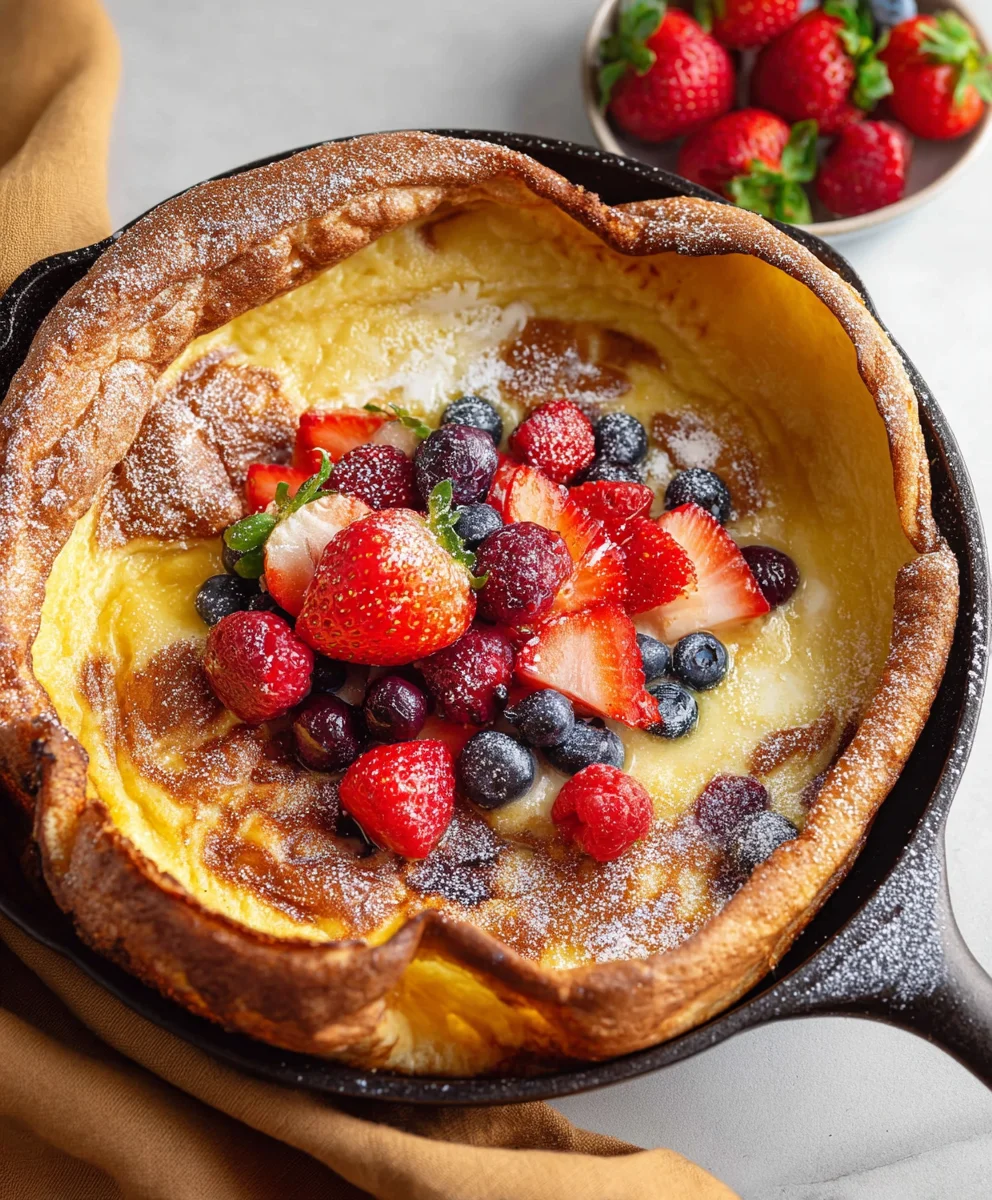
Place the skillet back into the hot oven, on the middle rack. The Baked German Pancake will begin to puff up dramatically within minutes. It’s a truly impressive sight to behold! The edges will rise high up the sides of the skillet, while the center will remain slightly sunken. This is normal and desired. Bake for approximately 15-20 minutes. The exact time will depend on your oven and how vigorously the pancake puffs. You’re looking for a beautiful golden-brown color all over, especially around the puffed edges. The center should be set but still have a slight wobble, indicating it’s cooked through without being dry. Avoid the temptation to open the oven door too early, as this can cause the pancake to deflate.
Once the pancake is golden brown and beautifully puffed, carefully remove the skillet from the oven using oven mitts. The dramatic puff will likely have subsided a bit as it cools, but it should still retain a lovely, light structure.
Serving and Enjoying
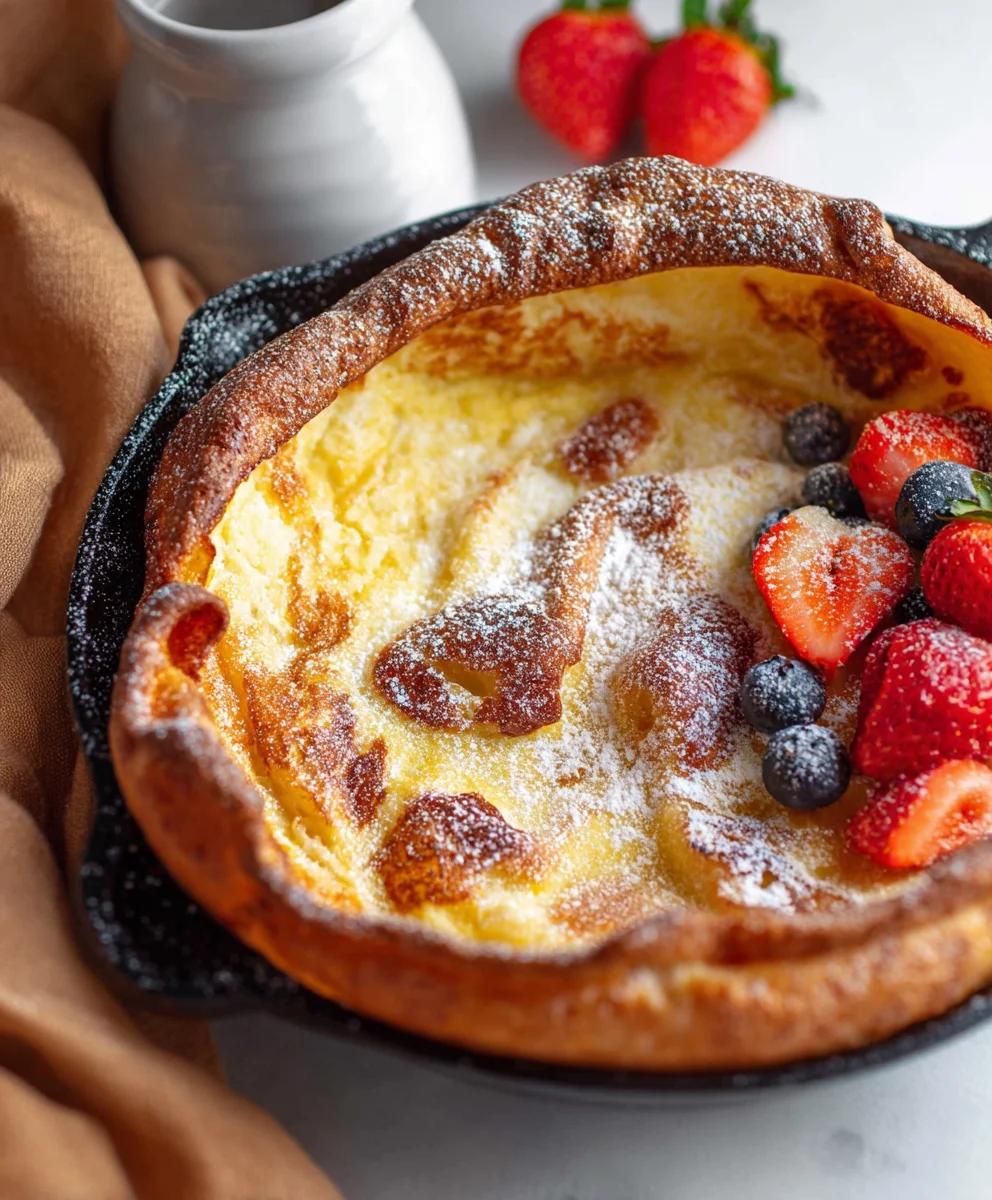
This is the moment of truth! While the Baked German Pancake is best served immediately, while it’s still warm and puffed, there are a few ways to enhance its flavor and presentation. Dust generously with powdered sugar. The fine powder melts into the warm pancake, adding a delicate sweetness.
For an extra burst of flavor and color, top with fresh berries or your favorite fruit. Sliced strawberries, blueberries, raspberries, or even a warm compote of stone fruits are fantastic accompaniments. A dollop of whipped cream or a drizzle of maple syrup can also be delightful additions, though many find the pancake delicious enough on its own.
To serve, simply slice the Baked German Pancake into wedges directly in the skillet, or carefully slide it out onto a serving platter. The interior should be tender and slightly custardy, a beautiful contrast to the crisp, golden edges. Enjoy this delightful breakfast or brunch treat while it’s at its peak!
Conclusion:
There you have it – your guide to creating the perfect Baked German Pancake! We’ve walked through the simple steps to achieve that gloriously puffed, golden-brown masterpiece. This delightful dish is surprisingly versatile, making it a fantastic option for both a special weekend breakfast and a comforting weeknight dessert. Don’t be intimidated by its impressive appearance; the process is straightforward and rewarding.
For serving suggestions, I love pairing our Baked German Pancake with a dusting of powdered sugar and a drizzle of fresh berries or a dollop of whipped cream. Maple syrup is, of course, a classic choice. If you’re feeling adventurous, consider adding a touch of lemon zest to the batter for a brighter flavor, or perhaps some thinly sliced apples or pears baked right in. Experimenting is part of the fun! I truly hope you give this Baked German Pancake recipe a try and discover your own favorite way to enjoy it.
Frequently Asked Questions:
Why did my Baked German Pancake not puff up as much as expected?
Several factors can influence the puff. Ensure your oven is fully preheated to the correct temperature, as a hot oven is crucial for the initial rise. Also, avoid opening the oven door during the first 20-25 minutes of baking, as this can cause it to deflate. Using fresh eggs and ensuring your batter is well-whipped can also contribute to a better puff.
Can I make this Baked German Pancake ahead of time?
While the best experience is enjoying it fresh from the oven, you can prepare the batter up to a few hours in advance and store it covered in the refrigerator. However, the dramatic puff is best achieved when the batter is fresh. It’s also possible to bake it, let it cool completely, and then reheat it gently in a low oven, though it won’t have the same spectacular rise.
Easy Baked German Pancake – A Fluffy Delight
A light and airy baked German pancake that puffs up dramatically in the oven, creating a fluffy delight perfect for breakfast or brunch.
Ingredients
-
1 cup all-purpose flour
-
2 tablespoons granulated sugar
-
1 teaspoon baking powder
-
1/4 teaspoon salt
-
2 large eggs
-
1 cup milk
-
2 tablespoons unsalted butter, melted
-
1 teaspoon vanilla extract
-
Powdered sugar, for dusting (optional)
-
Fresh berries or fruit, for serving (optional)
Instructions
-
Step 1
In a medium bowl, whisk together flour, sugar, baking powder, and salt. In a separate larger bowl, beat eggs until frothy, then whisk in milk, melted butter, and vanilla extract. -
Step 2
Gradually add the dry ingredients to the wet ingredients, whisking gently until just combined. A few small lumps are okay. Let the batter rest for 10-15 minutes. -
Step 3
Preheat oven to 425°F (220°C). Place a 10-inch oven-safe skillet (cast iron recommended) in the preheating oven. -
Step 4
Carefully remove the hot skillet from the oven. Add 2 tablespoons of unsalted butter and swirl to coat. The butter should sizzle. -
Step 5
Pour the batter into the hot, buttered skillet and immediately place back into the preheated oven. -
Step 6
Bake for 15-20 minutes, or until puffed and golden brown. Avoid opening the oven door during baking. -
Step 7
Carefully remove from oven. Dust with powdered sugar and serve immediately with fresh berries or fruit, if desired.
Important Information
Nutrition Facts (Per Serving)
It is important to consider this information as approximate and not to use it as definitive health advice.
Allergy Information
Please check ingredients for potential allergens and consult a health professional if in doubt.

Leave a Comment