

Sandwich rolls – no knead – 2 hours – that’s the magical phrase that unlocks a world of perfectly pillowy, incredibly easy homemade bread! If you’ve ever dreamt of pulling warm, fragrant rolls from your oven without spending hours slaving away at the dough, then this recipe is your answer. There’s something undeniably comforting and satisfying about a freshly baked roll, and these are no exception. People absolutely adore this recipe because it delivers that artisanal bakery quality with minimal effort. What truly makes these sandwich rolls – no knead – 2 hours so special is the ingenious technique that allows gluten to develop on its own, resulting in a tender crum extractb and a delightful chew, all while you get on with your day. Get ready to elevate your sandwiches, appetizers, or simply enjoy them with a smear of butter – the aroma alone is worth the wait!
Why You’ll Love These Rolls
Forget the strenuous kneading and long proofing times. These sandwich rolls – no knead – 2 hours are designed for busy lives and begin extractner bakers. The simplicity of the ingredients, combined with a patient rise, transforms basic pantry staples into something truly extraordingin extract. Imagine the joy of serving your family or guests homemade rolls that taste like they came from a professional baker, all without the fuss.
The “No Knead” Magic
The secret lies in a high hydration dough and sufficient resting time. This allows the gluten strands to form naturally, creating that wonderful texture without any manual manipulation. It’s a revelation for anyone who thinks baking bread is too complicated.

Ingredients:
- 4 1/2 cups (600g) bread flour (all-purpose flour or white flour can also be used)
- 1 3/4 cups (420-450ml) warm water (around 35-40 degrees Celsius or 95-104 degrees Fahrenheit)
- 2 tablespoons instant or quick-rising yeast
- 1 tablespoon granulated sugar
- 2 teaspoons salt
Mixing the Dough
This no-knead method is incredibly forgiving and perfect for busy schedules. The key is allowing the yeast to do all the heavy lifting. First, gather all your ingredients. In a large mixing bowl, which should be at least a gallon in size to accommodate the dough’s rise, combine the bread flour, sugar, and salt. Give these dry ingredients a quick whisk with a fork to ensure they are evenly distributed. This prevents pockets of salt or sugar from affecting the dough’s flavor or yeast activity. Next, add the instant yeast to the dry ingredients. It’s important to use instant or quick-rising yeast for this recipe, as active dry yeast would require an additional blooming step which would complicate this simple no-knead approach.
Now, it’s time to introduce the warm water. Aim for a temperature between 35-40 degrees Celsius (95-104 degrees Fahrenheit). Water that is too hot will kill the yeast, rendering it inactive, and water that is too cold won’t activate it sufficiently. You can test this by feeling it on your wrist – it should feel comfortably warm, not hot. Gradually pour the warm water into the bowl with the dry ingredients. Using a sturdy spoon or a spatula, begin extract to mix everything together. Your goal here isn’t to develop gluten through vigorous mixing, but simply to ensure all the flour is hydrated and there are no dry patches. The dough will be very sticky and shaggy at this stage, and that’s perfectly normal. Don’t be tempted to add more flour; the stickiness is crucial for the tender crum extractb of these sandwich rolls. Mix until just combined, which should take about 1-2 minutes. Scrape down the sides of the bowl to make sure all the flour is incorporated into the wet ingredients.
First Rise: The Magic Happens
Once your dough is mixed and looks like a very wet, somewhat lumpy mass, it’s time for the first rise. Lightly grease the inside of the mixing bowl with a little bit of olive oil or cooking spray. You can also use a separate bowl if you prefer, just ensure it’s large enough. Using your hands (lightly greased with oil if you’re worried about sticking, though it’s less of an issue once the dough has rested), form the dough into a rough ball within the greased bowl. Cover the bowl tightly with plastic wrap or a damp kitchen towel. Place the covered bowl in a warm, draft-free spot to rise. A slightly warm oven (turned off, but preheated for a minute or two) or near a sunny window are good options. Let the dough rise for about 1 hour to 1 hour and 30 minutes. During this time, the yeast will ferment, producing carbon dioxide gas that will make the dough significantly increase in volume, becoming bubbly and airy. It should roughly double in size.
Shaping the Sandwich Rolls
After the first rise, the dough will be beautifully puffy and full of air bubbles. Gently uncover the bowl. You’ll notice the dough has a wet, slightly sticky texture. Turn the dough out onto a well-floured surface. Don’t be alarmed by its stickiness; just use plenty of flour on your hands and the work surface. This no-knead dough is intentionally wet. Lightly flour your hands and gently pat the dough into a rough rectangle. The goal here is to degas the dough slightly, releasing some of the larger air pockets without completely deflating it. Think of it as a gentle push rather than a hard punch. Then, fold the dough over itself a few times, like folding a letter. This helps to create some structure. Now, divide the dough into 8 equal portions. You can do this by eye, or use a kitchen scnon-alcoholic ale for precision. For each portion, gently form it into a round ball or a slightly elongated shape, depending on the style of sandwich roll you prefer. Pinch the seams together at the bottom to create a smooth surface on top. Place the shaped rolls onto a baking sheet lined with parchment paper, leaving a few inches between each one to allow for their final rise and to prevent them from sticking together as they bake.
Second Rise and Baking
Once your sandwich rolls are shaped and on the baking sheet, they need a second, shorter rise. Lightly dust the tops of the rolls with a little flour. Cover the baking sheet loosely with plastic wrap or a clean kitchen towel. Let them rest for another 30 to 45 minutes in a warm spot. They won’t necessarily double in size, but they should puff up noticeably. While the rolls are doing their second rise, preheat your oven to 220 degrees Celsius (425 degrees Fahrenheit). It’s crucial to have the oven fully preheated for a good crust. Just before you’re ready to bake, you can optionally score the tops of the rolls with a sharp knife or a lame if you wish. This allows for controlled expansion during baking. For a slightly softer crust, you can place a small oven-safe pan filled with a cup of hot water on the bottom rack of your oven while it preheats; this creates steam. Carefully remove the plastic wrap or towel from the rolls. Bake for 15-20 minutes, or until the rolls are golden brown and sound hollow when tapped on the bottom.
Cooling and Enjoying
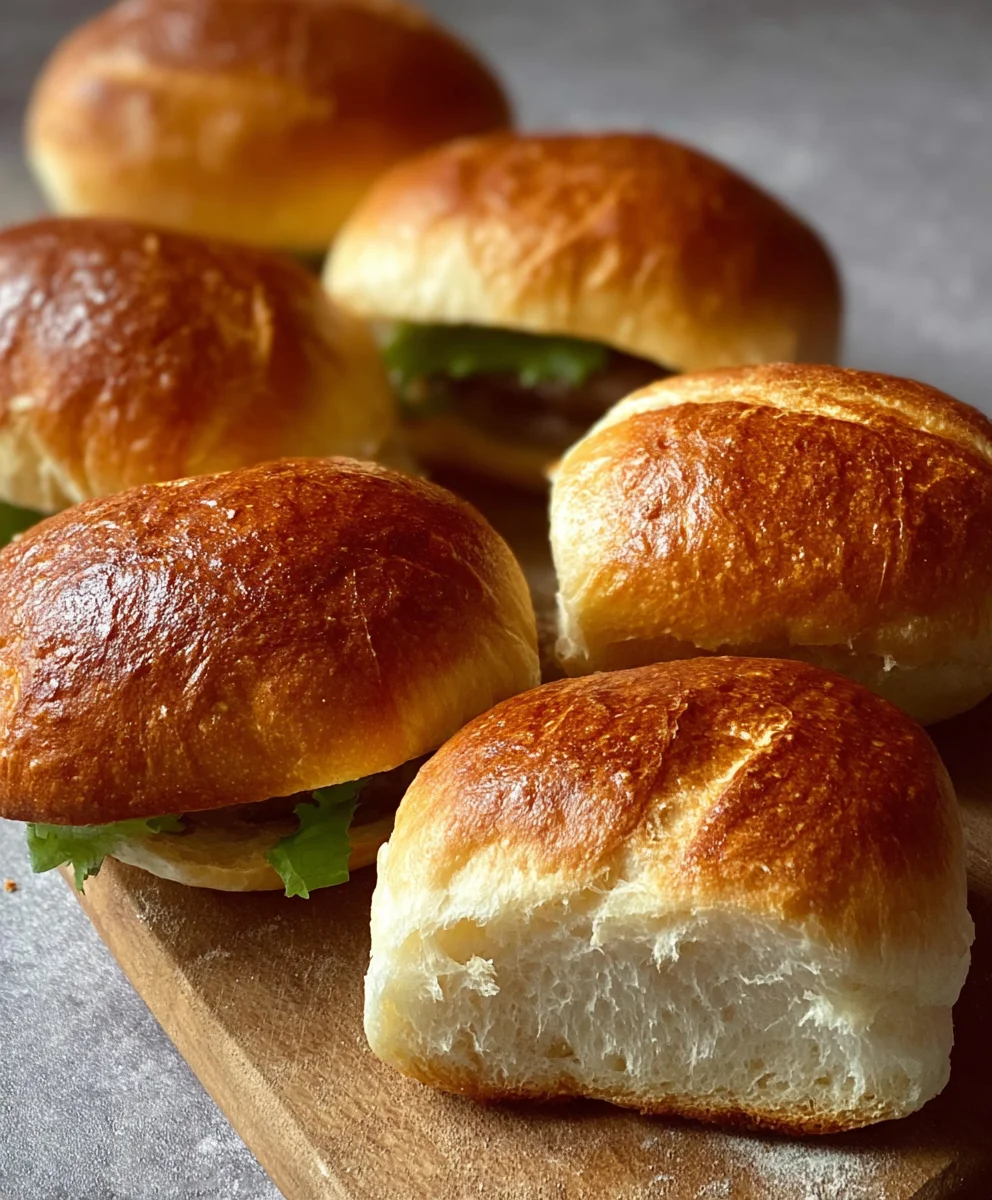
As soon as the sandwich rolls come out of the oven, they will smell absolutely divine. Transfer them immediately to a wire cooling rack. This is important because it allows air to circulate around the rolls, preventing the bottoms from becoming soggy. Resist the urge to cut into them right away! Letting them cool completely will allow the internal structure to set, ensuring a better texture when you slice them for your sandwiches. Once they’ve cooled to your liking – warm or completely at room temperature – they are ready to be enjoyed. These rolls are fantastic for any type of sandwich filling, from classic beef ham and cheese to more elaborate creations. You can also split them horizontally, lightly toast the insides, and use them as a base for garlic bread or for dipping into soups.
Conclusion:
And there you have it! You’ve successfully created delicious, soft, and airy Sandwich Rolls – No Knead – 2 Hours. The beauty of this recipe lies in its simplicity and the fantastic results you achieve with minimal effort. The gentle rise in just two hours means you can whip up fresh, homemade bread rolls for any occasion, from a quick lunch to a weekend brunch. These Sandwich Rolls – No Knead – 2 Hours are incredibly versatile, making them the perfect canvas for all your favorite fillings.
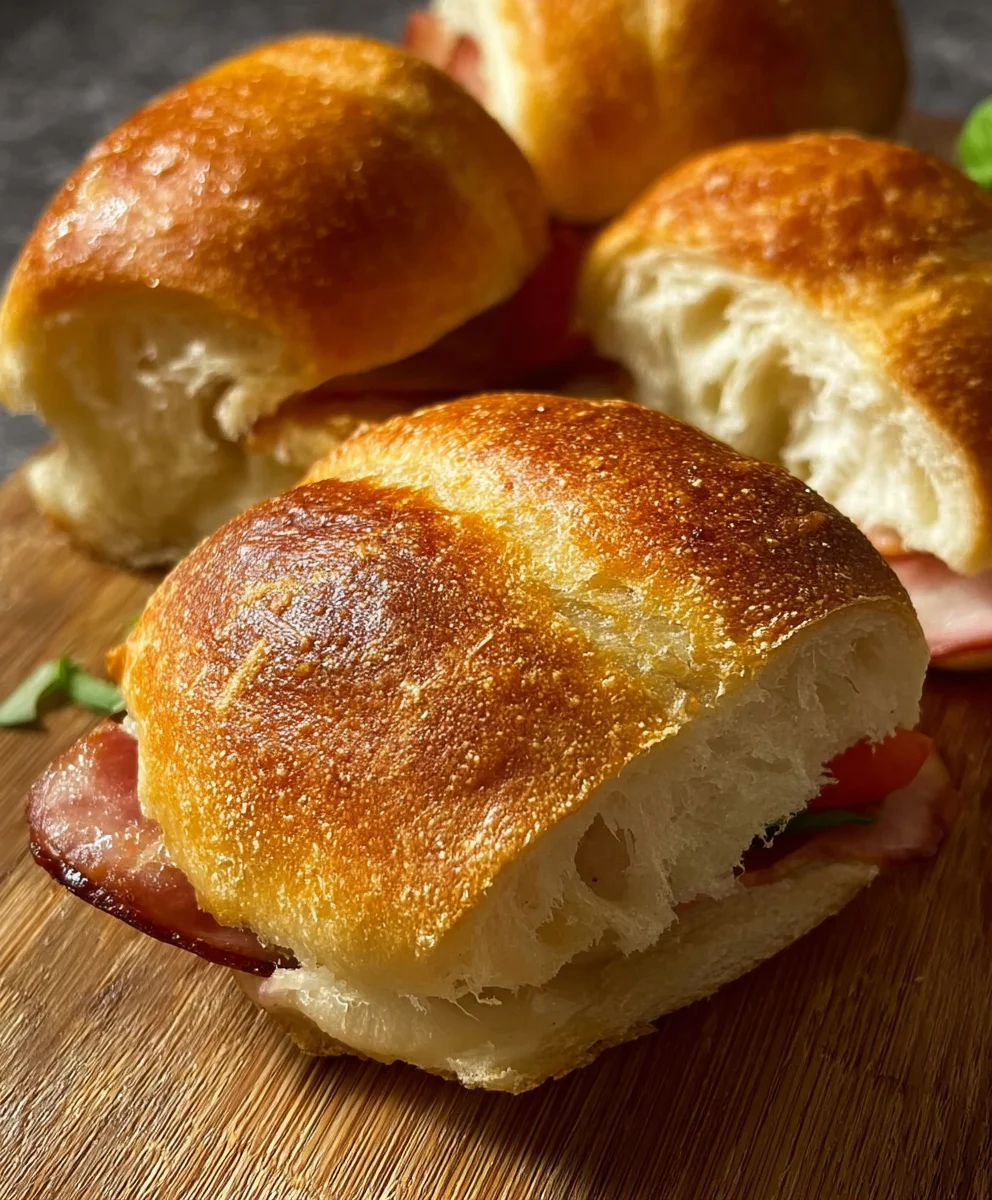
For serving suggestions, I love using these rolls for classic BLTs, gourmet grilled cheese, or as soft buns for mini sliders. They also make an excellent accompaniment to soups and stews. Don’t be afraid to get creative with variations! You can add herbs like rosemary or thyme to the dough for an aromatic twist, or sprinkle a little coarse salt on top before baking for an extra savory kick. If you’re feeling adventurous, consider adding a touch of garlic powder or even some finely grated cheese to the dough itself. The possibilities are truly endless.
I truly hope you enjoy making and devouring these Sandwich Rolls – No Knead – 2 Hours as much as I do. They’re proof that amazing bread doesn’t require hours of kneading. Happy baking!
FAQs:
Can I make these Sandwich Rolls – No Knead – 2 Hours ahead of time?
Yes, you can. Once completely cooled, store them in an airtight container at room temperature for up to 2 days. For longer storage, you can freeze them individually wrapped in plastic wrap and then in a freezer bag for up to 2-3 months. Reheat gently in a warm oven or toaster oven.
What if my dough seems too sticky or too dry?
The humidity in your kitchen can affect the dough. If it’s too sticky to handle, lightly dust your hands and work surface with a little more flour, adding just a tablespoon at a time until manageable. If it seems too dry and crum extractbly, add a teaspoon of water or milk at a time until the dough comes together.
Easy No Knead Sandwich Rolls – Quick & Delicious Bread
Quick and delicious no-knead sandwich rolls that are perfect for busy schedules. This recipe uses a simple method where the yeast does all the work, resulting in soft and fluffy rolls.
Ingredients
-
4 1/2 cups (600g) bread flour
-
1 3/4 cups (420-450ml) warm water (35-40 degrees Celsius)
-
2 tablespoons instant or quick-rising yeast
-
1 tablespoon granulated sugar
-
2 teaspoons salt
Instructions
-
Step 1
In a large mixing bowl, combine bread flour, sugar, and salt. Whisk to distribute evenly. Add instant yeast and stir. -
Step 2
Gradually pour in warm water (35-40 degrees Celsius) and mix with a sturdy spoon or spatula until just combined and no dry patches remain. The dough will be very sticky and shaggy. -
Step 3
Lightly grease the mixing bowl, form the dough into a rough ball, cover tightly, and let rise in a warm spot for 1 to 1.5 hours, or until doubled in size. -
Step 4
Turn the risen dough onto a well-floured surface. Gently pat into a rectangle, fold it over itself a few times, and divide into 8 equal portions. Shape each portion into a ball or elongated roll and place on a parchment-lined baking sheet. -
Step 5
Cover the shaped rolls loosely and let them rest for 30-45 minutes until noticeably puffed. Preheat oven to 220 degrees Celsius (425 degrees Fahrenheit). -
Step 6
Bake for 15-20 minutes, or until golden brown and hollow-sounding when tapped. Cool on a wire rack before slicing.
Important Information
Nutrition Facts (Per Serving)
It is important to consider this information as approximate and not to use it as definitive health advice.
Allergy Information
Please check ingredients for potential allergens and consult a health professional if in doubt.



Leave a Comment